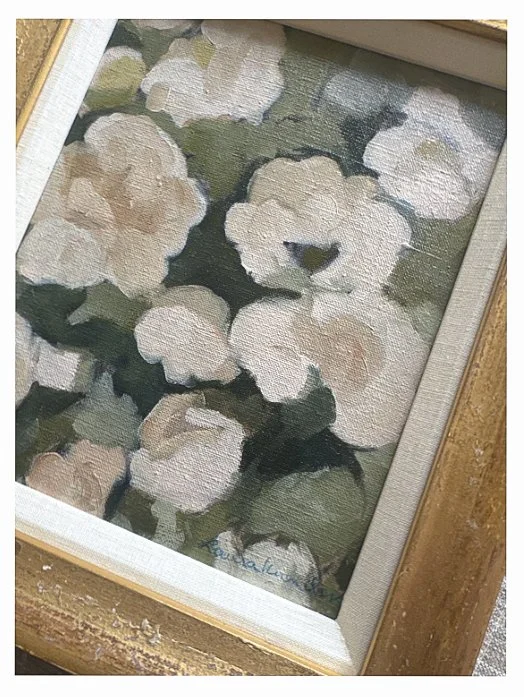
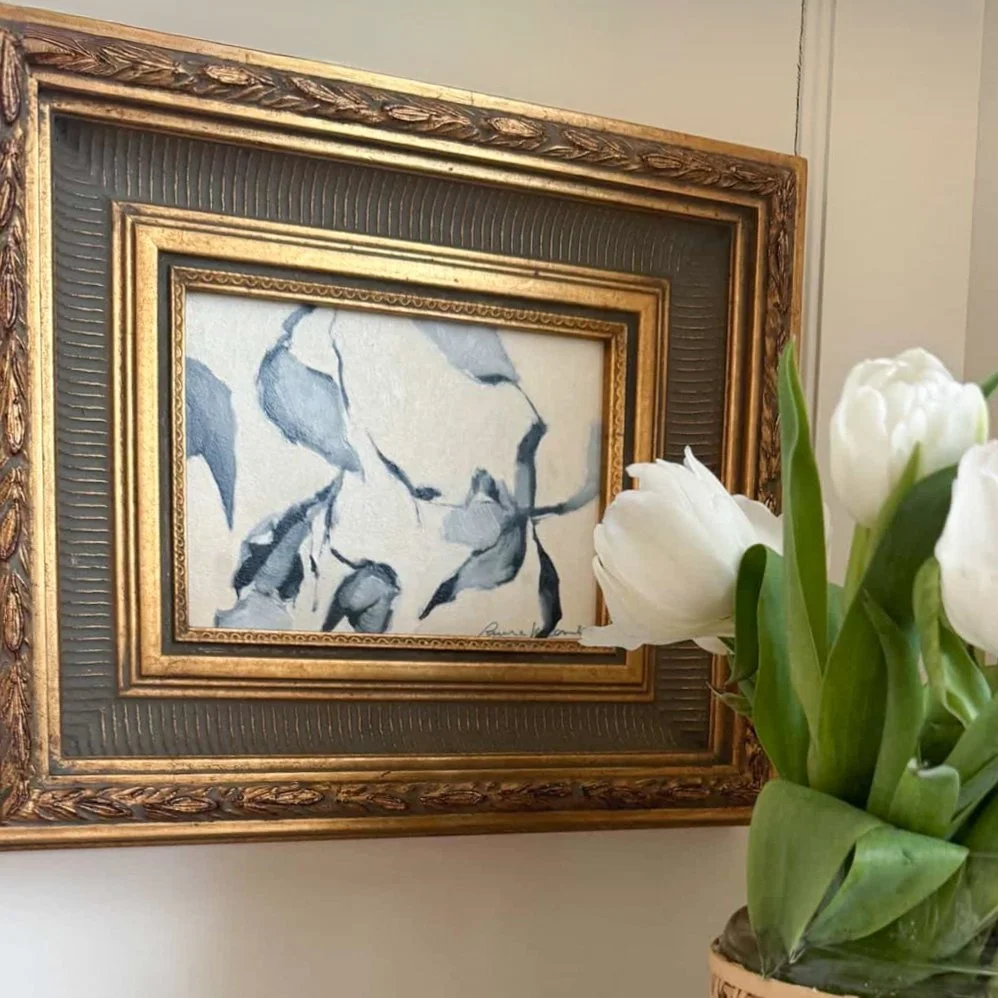
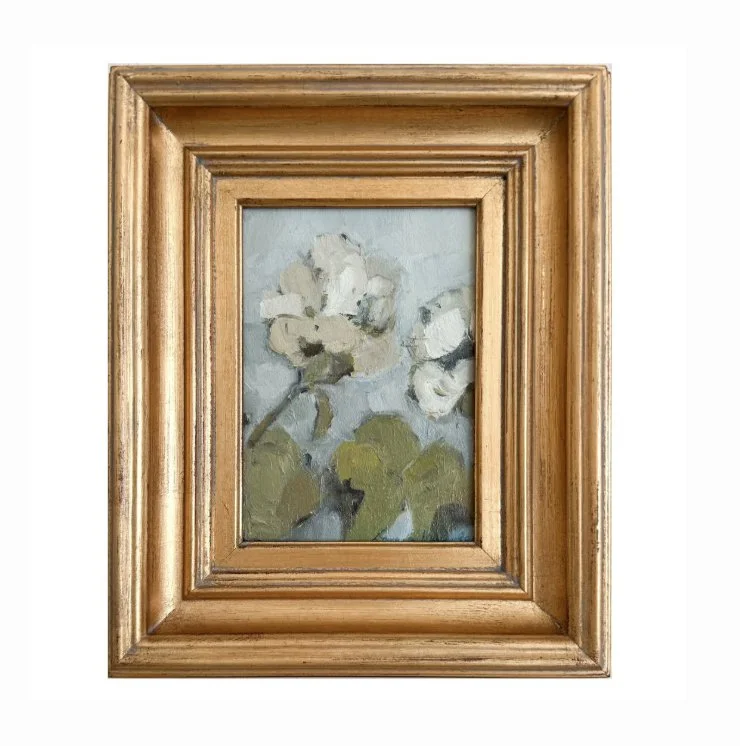
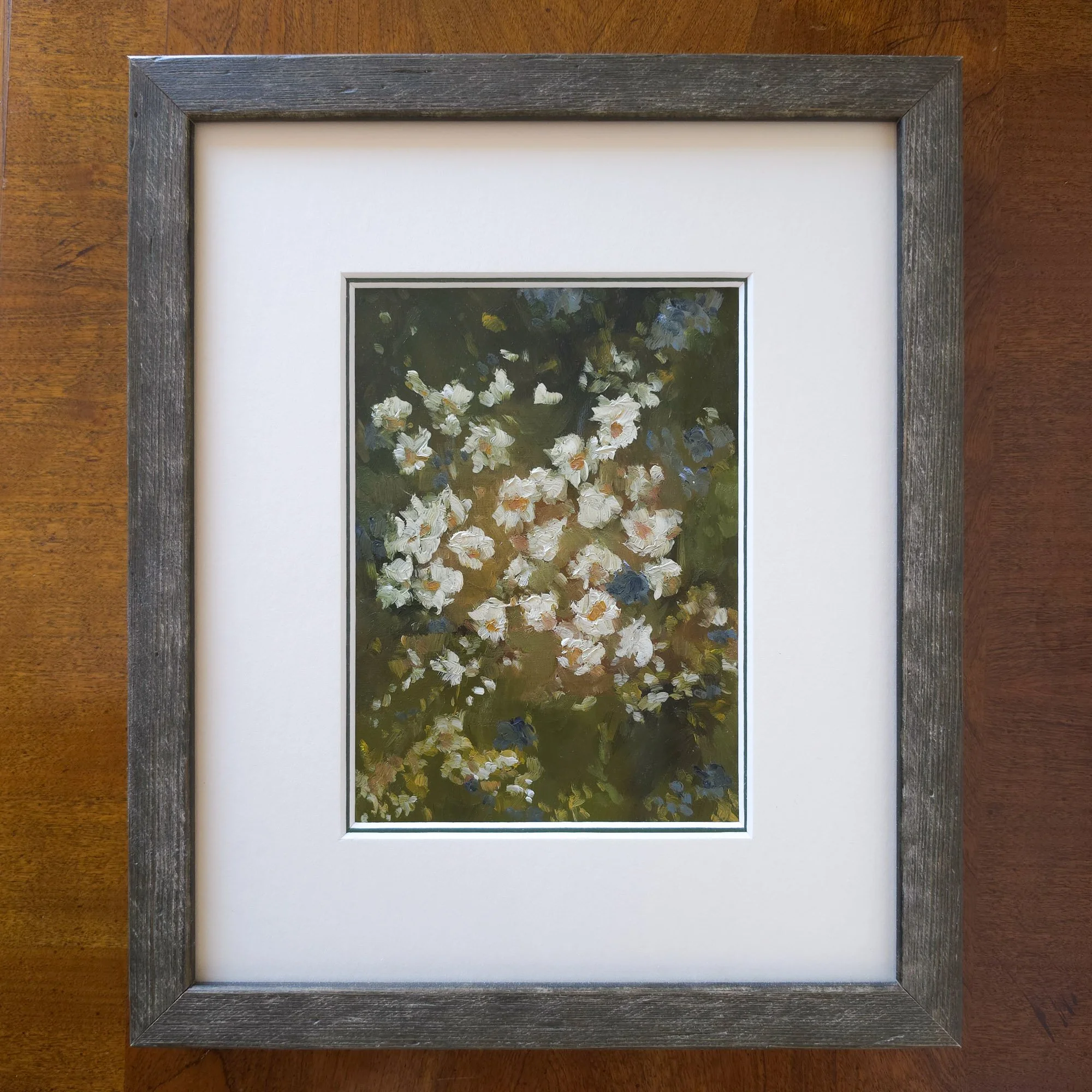
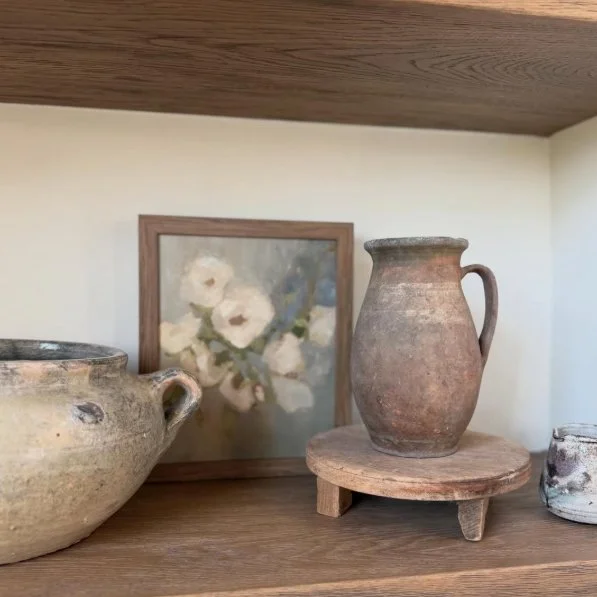
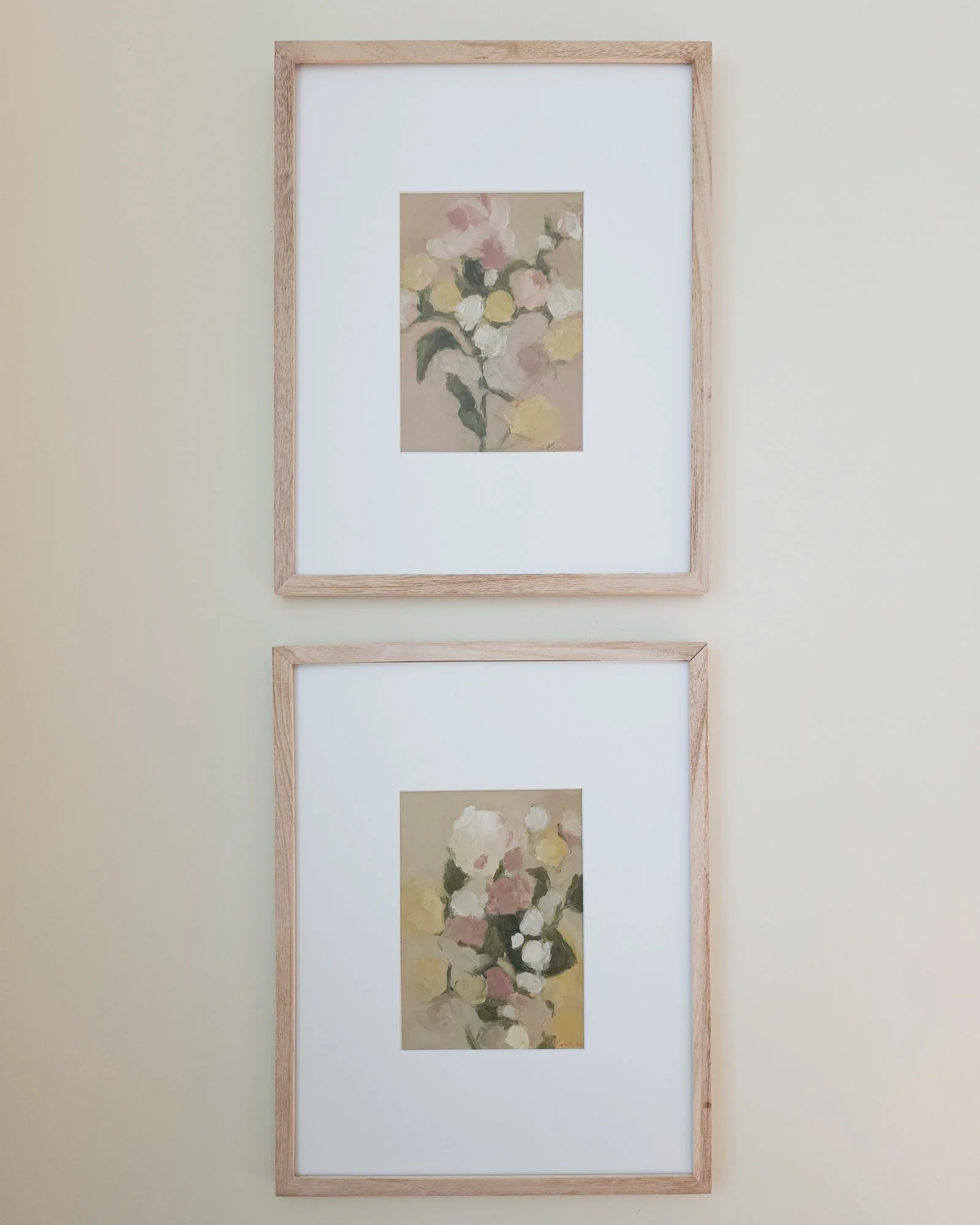
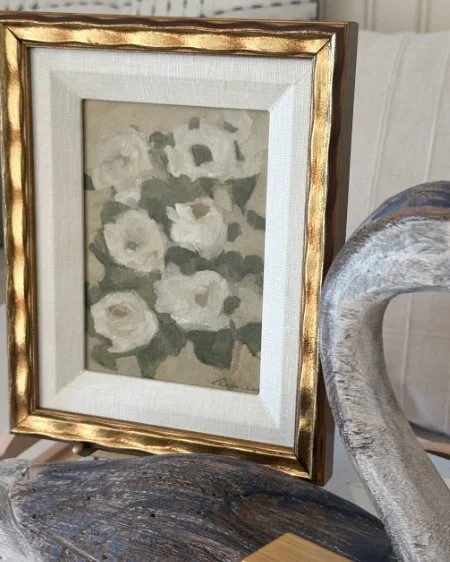
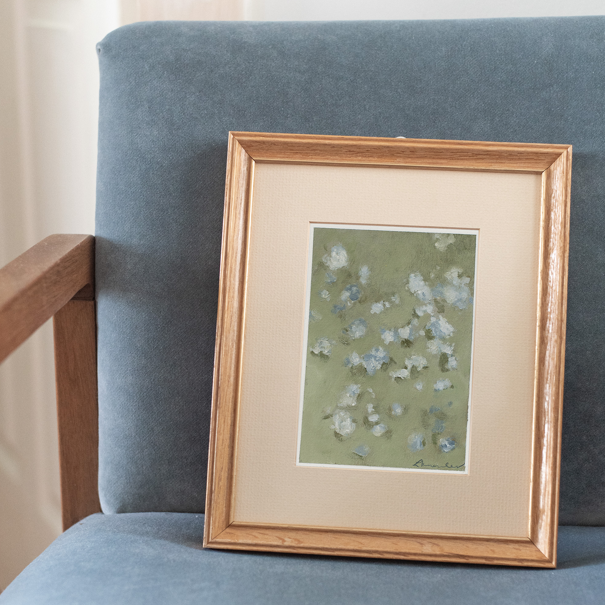
Framing Oil on Paper
Many of my paintings are created with oil on paper. The surface lends itself to a delicate feel that suits my work. When handled and framed properly, paper is a lasting and stable surface for oil paintings.
I always use archival, professional papers. The paper is specially prepared for oil, most often by the manufacturer, and sometimes in the studio. Once dry, each painting is sealed with Gamvar gloss varnish to protect the surface. I list all of the materials in both the item description and on the back of the work itself.
Works on paper are sold unframed. Some pieces are sold with a cotton-colored, archival, custom cut mat. This will be listed in the description.
HOW TO FRAME YOUR PAINTING:
Framing: Your painting is sold unframed, unless otherwise specified. Framing your new piece helps to preserve the work and protect it from environmental damage, discoloration and warping.
I recommend having your painting framed under glass, especially if it will be in a high traffic area. Clear framing glass is the standard option that provides basic protective qualities. It works well in spaces with softer or controlled lighting and is often more affordable. Museum glass is made to reduce glare and reflections so the details and surface of your piece is easier to see in varied lighting conditions. Oil paintings are often framed with a spacer so the surface of the painting never rests directly on the glass. This prevents “fogging” over time.
I also love the look of an oil paintings framed without glass. However, you would need to take extra care with placement, handling, and cleaning to prevent environmental damage.
There are so many framing styles to choose from, and your professional framer will have the best recommendations for you. As always, if you’d like input on the style of frame please send me a message.
BEST PRACTICES FOR CARE:
Placement: Keep the artwork in a stable environment, away from direct sunlight, moisture and high humidity, very dry air, and temperature extremes. Be sure to keep your artwork away from heat sources such as radiators, vents, and fireplaces.
Handling: Hold the paper by the edges and avoid touching the painted surface.
Cleaning: Gently dust the frame and glass at least every 3 months, but use your discretion.
If you have decided to keep your piece unframed, the painted surface can be dusted with a very light hand. The first time you dust your painting use a brand new, very soft brush (like a fluffy powder brush), and take care along the edges of the paint. This brush should be cleaned periodically and only be used to dust your artwork.
Never use solvents or liquid of any kind to clean your painting.
Complicated marks should be cleaned professionally. If your painting gets marked or damaged please reach out.
With proper care, your painting will remain vibrant and beautiful for years to come.